
Dwamdwa · The Workshop
The work is woven.
You hold the pen.
A calm desktop workshop where AI companions help you make real things — and nothing ships without your say.
AI tools are loud.
Your work deserves a quieter room.
Most AI tools want to impress you — streams of confident claims, dashboards that blink, work you can't quite verify.
Dwamdwa is built the other way around: a warm room, two careful companions, and one simple contract.
The room tells the truth. You remain the author.
How It Works
From a wish to a thing you can trust.
-
01
Ask for something.
Start a Quest in plain words. Point it at a folder, a repo, a project — the Workshop works where your files live.
-
02
Watch it woven.
Threads of work are spun and carried out. Bramble reads each one as craft — is it well made? Pip reads it as experience — is it good to live with?
-
03
Approve at the Gate.
Nothing lands without you. You see the actual changes, the evidence, the checks that ran — then you say yes, or steer.
-
04
It becomes knowledge.
Finished work is woven into a tapestry, and its lessons join a library your next quest can draw on.
The joins are sound. One check left to run.
Warmer already — but let the lamp fade in, not snap on.
Why It's Different
Trust is shown, not asked for.
Evidence over self-report
When a thread says "done," the room shows receipts: which files changed, which checks ran, whether the claims match the diff.
You hold the pen
The companions propose; deterministic checks decide what's even eligible; you decide what ships. Set the pace — by hand, paced, or steady — and the Workshop keeps to it.
A memory you can tend
Work becomes tapestries, tapestries become lessons, lessons age and get pruned and composted. A library, not a landfill.
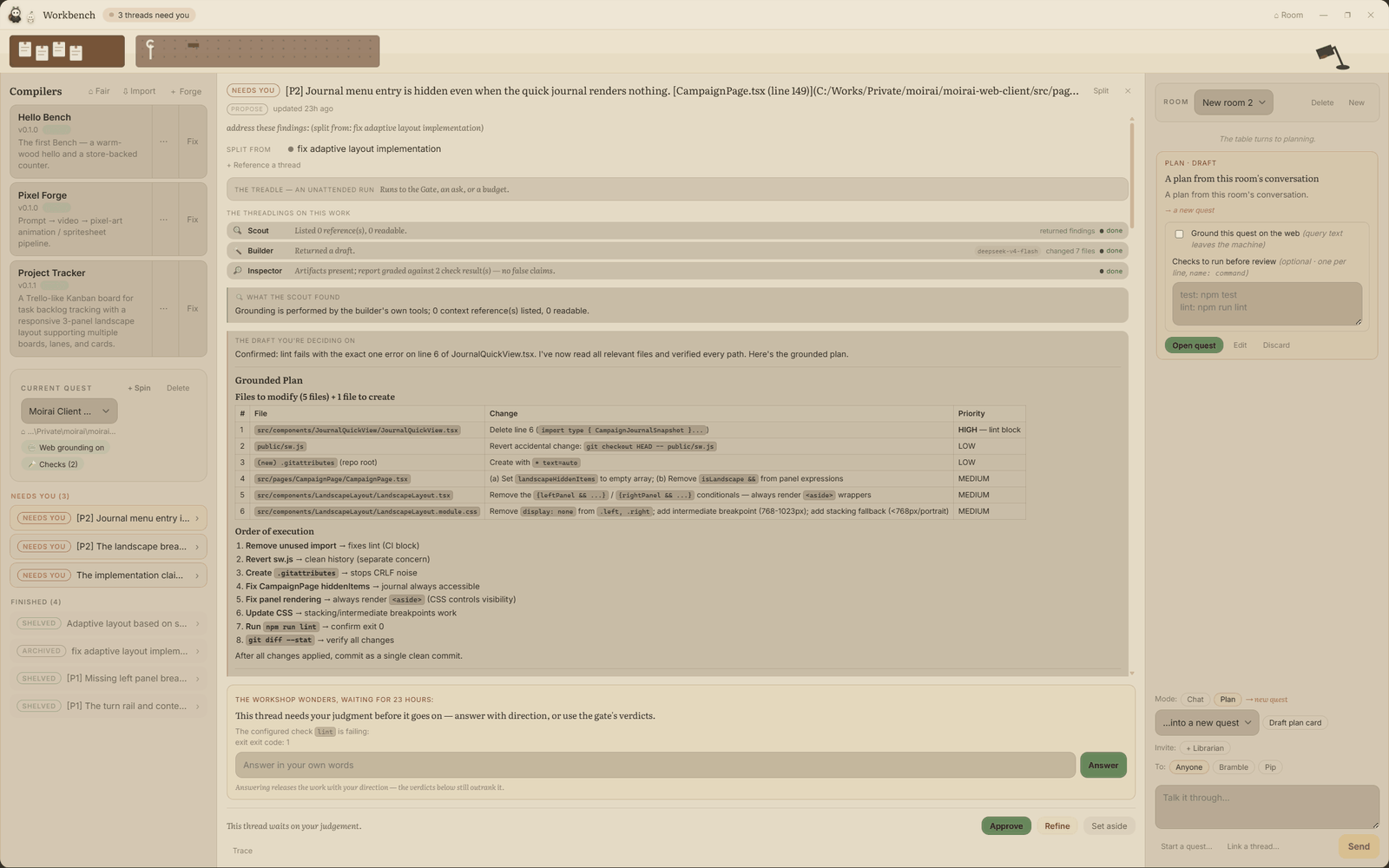
A room, not a dashboard.
The Workshop looks like a warm room because it is one. Shelves fill as your library grows. The window turns with the seasons — your hemisphere's seasons. Pip settles down with a book when there's been reading to do.
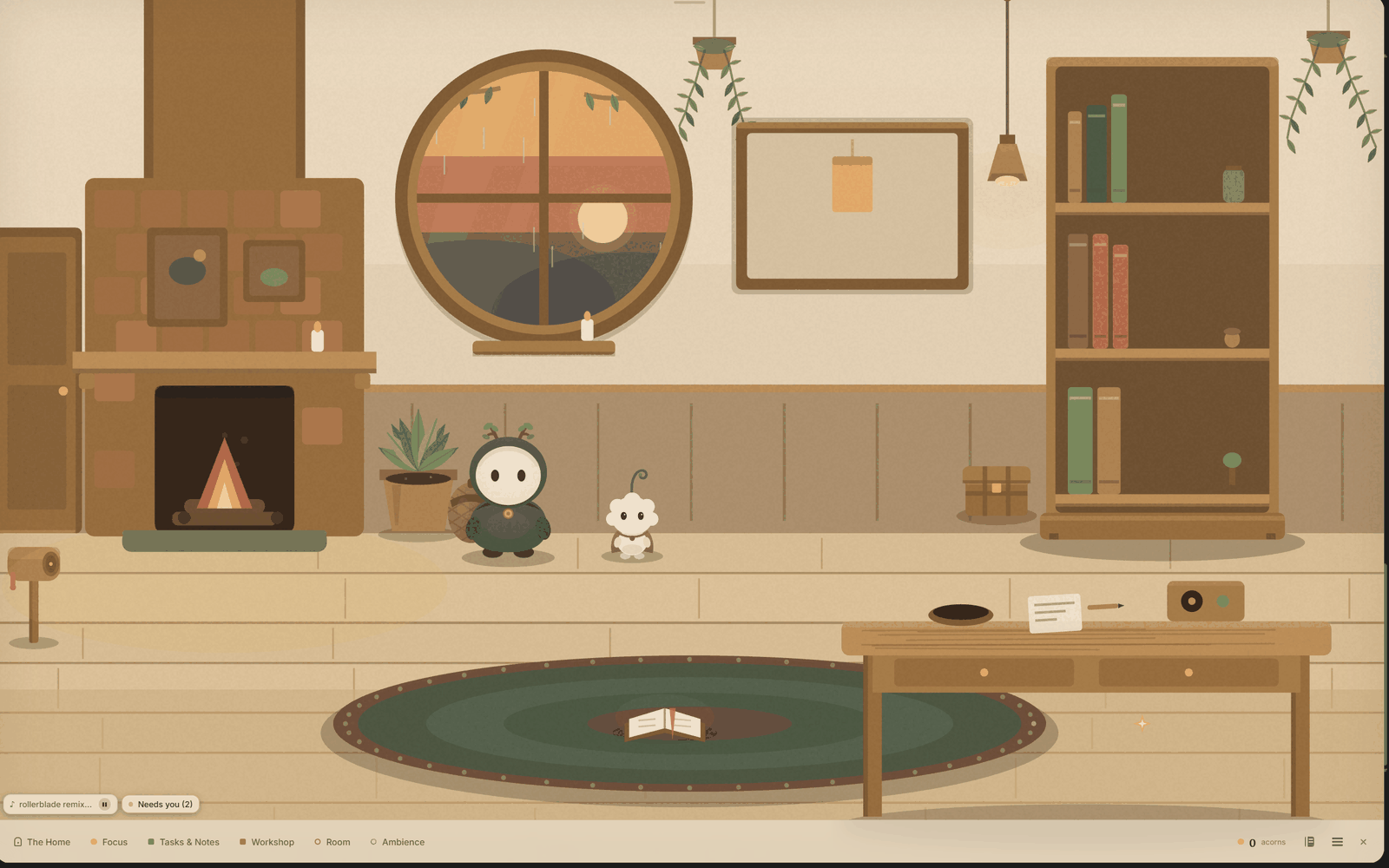
And when the room changes, it's because your work did. Everything you see is derived from what actually happened — never painted on.
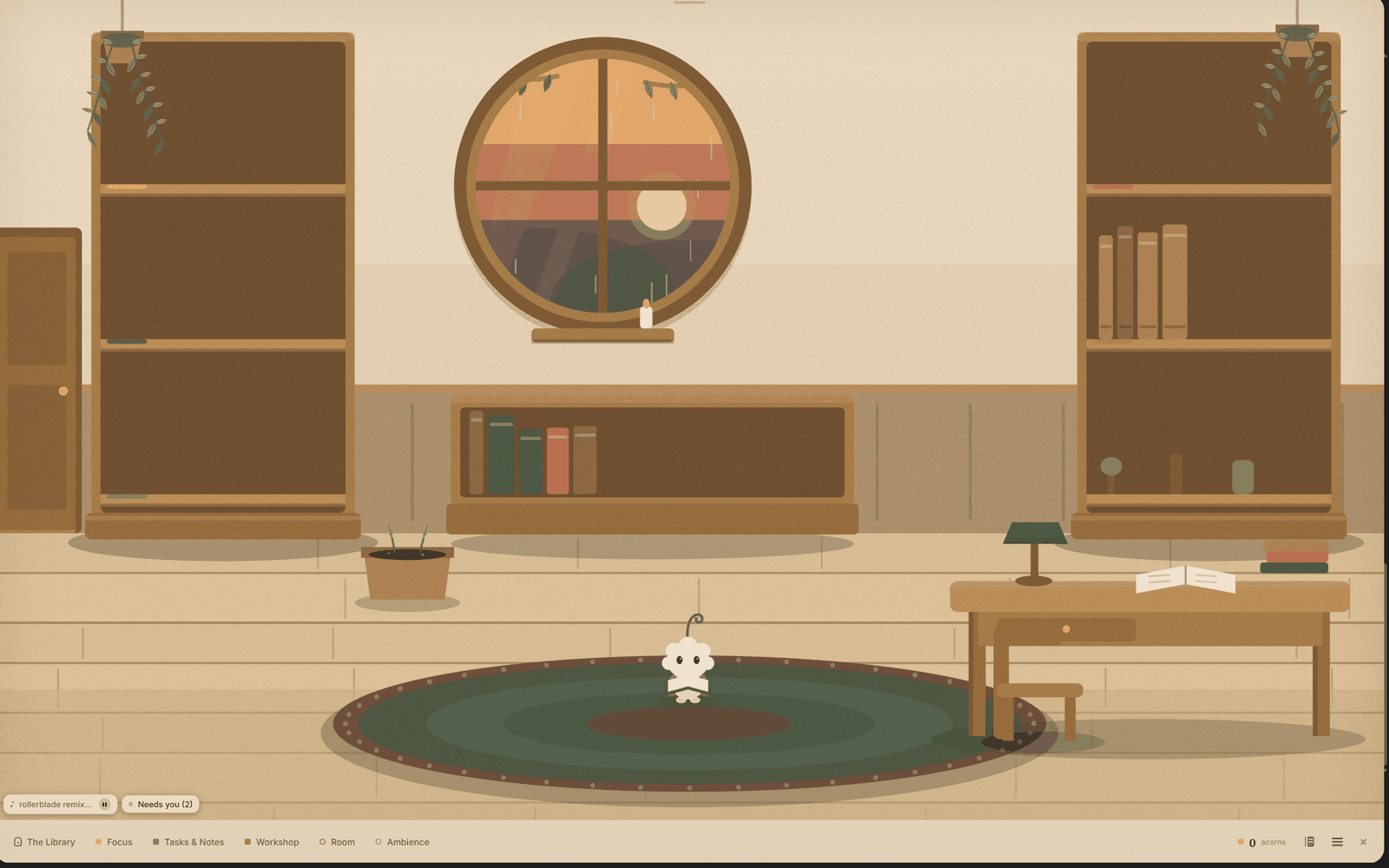
A place you return to, not a feed you refresh.
Built in its own room.
We don't just make the Workshop — we make it in the Workshop. Its own next feature is a Quest like any other: spun into threads, read by Bramble and Pip, shown at the Gate before it lands.
So the contract isn't a promise we ask you to take on faith. It's the one we already work under, every day.
The tool builds the tool — and you can read every thread of it.
The Companions
You've met them before.
On our storybook pages, Bramble keeps seeds and Pip collects stories. In the Workshop, they have work to do.

Bramble
The Craft Lens
Reads every thread as craft. Is it well made? Will it hold? Bramble is the reason "it works" is never taken on faith.

Pip
The Experience Lens
Reads every thread as experience. Is it good to live with? Does it feel right? Pip is the reason "it works" is never enough.
Neither leads. Neither follows. And neither will ever interrupt you to chat.
Questions
Honest answers.
Is this just another AI agent?
There's an agent inside, but the product is the room around it. One model deciding alone is the very thing we're built against: here, two lenses read the work from different angles — and when they disagree, that disagreement comes to you rather than being quietly averaged away. Deterministic checks, not the agent's confidence, decide what's even eligible to ship. The agent does the work; the room makes it trustworthy.
Can I see how it's built?
Yes — the Workshop's app source is public. It's Rust and TypeScript, extensively tested, and every non-obvious decision carries a note back to the reasoning behind it. Read the source on GitHub.
Does it run on my machine?
Yes. Dwamdwa is a desktop app. Your projects stay in your folders, and you choose which AI provider it may talk to — and when.
What can it make?
Software first — that's what we build it with, every day. The Workshop is designed for more benches over time, but we'd rather show you than promise you.
Which platforms?
Windows first. Other platforms will follow the same way everything here ships: when they're actually ready.
Can I use it today?
Not yet — it's in the last stretch before its first release. Leave your email below and we'll send one letter when the doors open. That's the only thing we'll ever send.
What will it cost?
Honestly: we haven't decided. First weavers will hear it from us first, plainly.
Be among the first weavers.
One letter when the doors open. Nothing else, ever.
Noted, and welcome. The letter will find you.